 06:46
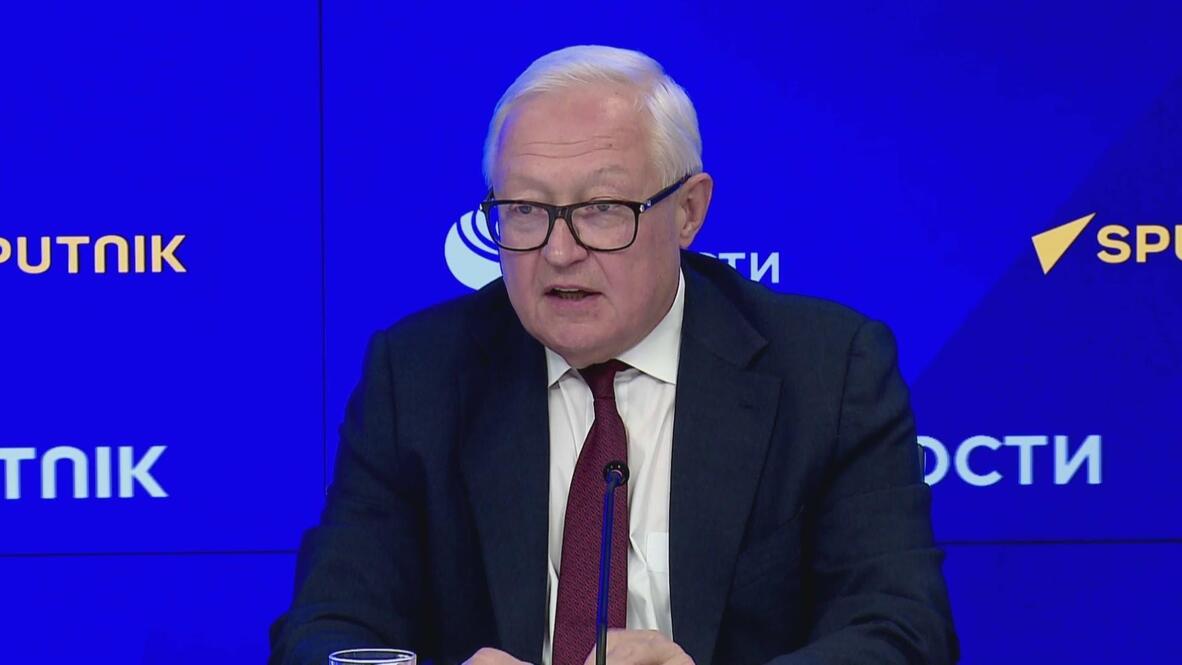
06:46Russian Deputy Foreign Minister Sergei Ryabkov said Iran and the UAE had held their first bilateral talks since the escalation in the Middle East began, speaking at a briefing on the BRICS summit in Moscow on Wednesday.
"It is very important that the UAE and Iran, which, by and large, had long been on different sides in their assessments of what was happening, have now managed, putting aside their differences, including the long-standing ones known to us all, to focus on a constructive agenda. Once again, this has demonstrated the strength of BRICS. Once again, the appeal of BRICS has made itself felt," he said.
Ryabkov also expressed hope that the meeting would help bring Tehran and Abu Dhabi's positions closer together, while stressing that their differences should not be expected to be resolved quickly.
"Despite all the initiatives and talk that the conflict will be resolved in the near future, the situation currently shows no signs of a real trend towards a political settlement on the terms being imposed on the region by Washington and West Jerusalem," the diplomat stated.
The United States and Israel launched military operations against Iran on February 28. The strikes killed Supreme Leader Ali Khamenei and other senior officials, while Iran retaliated against US bases in the region and closed the Strait of Hormuz, causing major disruption to global energy markets.
Talks in Islamabad on April 11-12 ended without an agreement amid differences over issues including the Strait of Hormuz and Iran's nuclear programme.
The conflict escalated again in June after Iran downed a US Apache helicopter near the Strait of Hormuz, prompting US strikes on Iranian targets. Washington launched another round of strikes on July 7, targeting Iranian air defences, command networks, coastal radar sites and other military assets.
UAE and Iran put differences aside through the strength of BRICS - Russian Deputy FM Ryabkov
Russian Deputy Foreign Minister Sergei Ryabkov said Iran and the UAE had held their first bilateral talks since the escalation in the Middle East began, speaking at a briefing on the BRICS summit in Moscow on Wednesday.
"It is very important that the UAE and Iran, which, by and large, had long been on different sides in their assessments of what was happening, have now managed, putting aside their differences, including the long-standing ones known to us all, to focus on a constructive agenda. Once again, this has demonstrated the strength of BRICS. Once again, the appeal of BRICS has made itself felt," he said.
Ryabkov also expressed hope that the meeting would help bring Tehran and Abu Dhabi's positions closer together, while stressing that their differences should not be expected to be resolved quickly.
"Despite all the initiatives and talk that the conflict will be resolved in the near future, the situation currently shows no signs of a real trend towards a political settlement on the terms being imposed on the region by Washington and West Jerusalem," the diplomat stated.
The United States and Israel launched military operations against Iran on February 28. The strikes killed Supreme Leader Ali Khamenei and other senior officials, while Iran retaliated against US bases in the region and closed the Strait of Hormuz, causing major disruption to global energy markets.
Talks in Islamabad on April 11-12 ended without an agreement amid differences over issues including the Strait of Hormuz and Iran's nuclear programme.
The conflict escalated again in June after Iran downed a US Apache helicopter near the Strait of Hormuz, prompting US strikes on Iranian targets. Washington launched another round of strikes on July 7, targeting Iranian air defences, command networks, coastal radar sites and other military assets.
Russian Deputy Foreign Minister Sergei Ryabkov said Iran and the UAE had held their first bilateral talks since the escalation in the Middle East began, speaking at a briefing on the BRICS summit in Moscow on Wednesday.
"It is very important that the UAE and Iran, which, by and large, had long been on different sides in their assessments of what was happening, have now managed, putting aside their differences, including the long-standing ones known to us all, to focus on a constructive agenda. Once again, this has demonstrated the strength of BRICS. Once again, the appeal of BRICS has made itself felt," he said.
Ryabkov also expressed hope that the meeting would help bring Tehran and Abu Dhabi's positions closer together, while stressing that their differences should not be expected to be resolved quickly.
"Despite all the initiatives and talk that the conflict will be resolved in the near future, the situation currently shows no signs of a real trend towards a political settlement on the terms being imposed on the region by Washington and West Jerusalem," the diplomat stated.
The United States and Israel launched military operations against Iran on February 28. The strikes killed Supreme Leader Ali Khamenei and other senior officials, while Iran retaliated against US bases in the region and closed the Strait of Hormuz, causing major disruption to global energy markets.
Talks in Islamabad on April 11-12 ended without an agreement amid differences over issues including the Strait of Hormuz and Iran's nuclear programme.
The conflict escalated again in June after Iran downed a US Apache helicopter near the Strait of Hormuz, prompting US strikes on Iranian targets. Washington launched another round of strikes on July 7, targeting Iranian air defences, command networks, coastal radar sites and other military assets.