 04:11
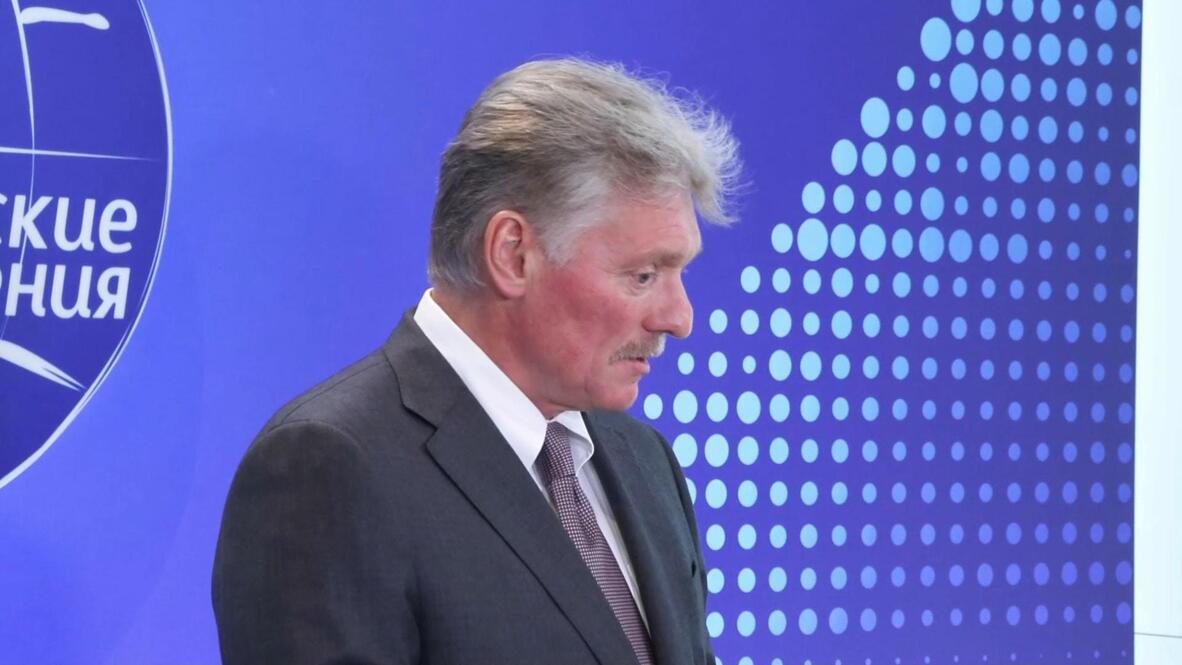
04:11Russian presidential spokesperson Dmitri Peskov said that the Kremlin saw discussions in the EU about talking with Moscow as a 'positive' - but it needed more commitment too - speaking to journalists in Moscow on Wednesday.
"First, we need to be sure that Europe wants dialogue. The fact that discussions have begun is a positive sign. The fact that these discussions are contradictory is a negative sign. Whether we will later need mediators is something that hardly anyone can predict at this stage," Peskov noted.
Media outlets have reported EU leaders were debating whether there should be more engagement - and if there should be a 'lead negotiator', with Foreign Policy chief Kaja Kallas reportedly seen as too 'hawkish' on Russia. European Council President Antonio Costa also admitted his team had tried to open a 'back channel' to Moscow.
Moscow launched a military offensive in Ukraine in late February 2022 after recognising the independence of the Donetsk and Lugansk People's Republics (DPR and LPR), claiming that Kiev had failed to guarantee their special status under the 2014 Minsk Agreements, and urging Ukraine to declare itself officially neutral and give assurances that it would never join NATO.
Kiev denounced the Russian action as an invasion. Volodymyr Zelensky imposed martial law throughout the country, announcing a general mobilisation, while the EU and the US imposed several rounds of sanctions on Moscow.
EU debate on engaging with Russia is 'positive sign' but contradictions aren't great! - Peskov
Russian presidential spokesperson Dmitri Peskov said that the Kremlin saw discussions in the EU about talking with Moscow as a 'positive' - but it needed more commitment too - speaking to journalists in Moscow on Wednesday.
"First, we need to be sure that Europe wants dialogue. The fact that discussions have begun is a positive sign. The fact that these discussions are contradictory is a negative sign. Whether we will later need mediators is something that hardly anyone can predict at this stage," Peskov noted.
Media outlets have reported EU leaders were debating whether there should be more engagement - and if there should be a 'lead negotiator', with Foreign Policy chief Kaja Kallas reportedly seen as too 'hawkish' on Russia. European Council President Antonio Costa also admitted his team had tried to open a 'back channel' to Moscow.
Moscow launched a military offensive in Ukraine in late February 2022 after recognising the independence of the Donetsk and Lugansk People's Republics (DPR and LPR), claiming that Kiev had failed to guarantee their special status under the 2014 Minsk Agreements, and urging Ukraine to declare itself officially neutral and give assurances that it would never join NATO.
Kiev denounced the Russian action as an invasion. Volodymyr Zelensky imposed martial law throughout the country, announcing a general mobilisation, while the EU and the US imposed several rounds of sanctions on Moscow.
Russian presidential spokesperson Dmitri Peskov said that the Kremlin saw discussions in the EU about talking with Moscow as a 'positive' - but it needed more commitment too - speaking to journalists in Moscow on Wednesday.
"First, we need to be sure that Europe wants dialogue. The fact that discussions have begun is a positive sign. The fact that these discussions are contradictory is a negative sign. Whether we will later need mediators is something that hardly anyone can predict at this stage," Peskov noted.
Media outlets have reported EU leaders were debating whether there should be more engagement - and if there should be a 'lead negotiator', with Foreign Policy chief Kaja Kallas reportedly seen as too 'hawkish' on Russia. European Council President Antonio Costa also admitted his team had tried to open a 'back channel' to Moscow.
Moscow launched a military offensive in Ukraine in late February 2022 after recognising the independence of the Donetsk and Lugansk People's Republics (DPR and LPR), claiming that Kiev had failed to guarantee their special status under the 2014 Minsk Agreements, and urging Ukraine to declare itself officially neutral and give assurances that it would never join NATO.
Kiev denounced the Russian action as an invasion. Volodymyr Zelensky imposed martial law throughout the country, announcing a general mobilisation, while the EU and the US imposed several rounds of sanctions on Moscow.