 04:59
04:59Kazakh Security Council Secretary Gizat Nurdauletov said the Iran war had meant 'unprecedented threats' for the global economy - but had also only 'exacerbated a trend that has been developing for some time' speaking on the sidelines of the International Security Forum in Moscow Region on Thursday.
"The conflict in the Middle East and disruptions to shipping through the Strait of Hormuz and the Red Sea have created unprecedented threats to the economic interests of many nations. Despite the sheer scale of the crisis, it has merely exacerbated a trend that has been developing for some time: the transformation of pragmatic economic relations into hostages of geopolitical rivalry," he noted.
According to Nurdauletov, the most noticeable consequence was an artificially created instability in the field of food safety.
"Millions of people are already facing food shortages and rising food prices, not due to natural factors or crop failures, but because of logistical disruptions. The resilience of transport, energy and logistics infrastructure is taking on a strategic dimension amid growing instability. Guarantees of uninterrupted operation and free access must become a fundamental element of the new security architecture in the context of war and a multipolar world," the secretary added.
In turn, DPRK's State Intelligence Service Director Ri Chang-dae emphasised that the international situation is approaching a critical phase of tension due to what he called double standards and interference to preserve a Western-led unipolar system.
"In order to put an end to the global security crisis and instability in the world, we must build up our own security capabilities and work closely together in solidarity towards the construction of a multipolar world. It is essential to respect civilisations, cultures, traditions, development patterns and political systems," Ri Chang-dae said.
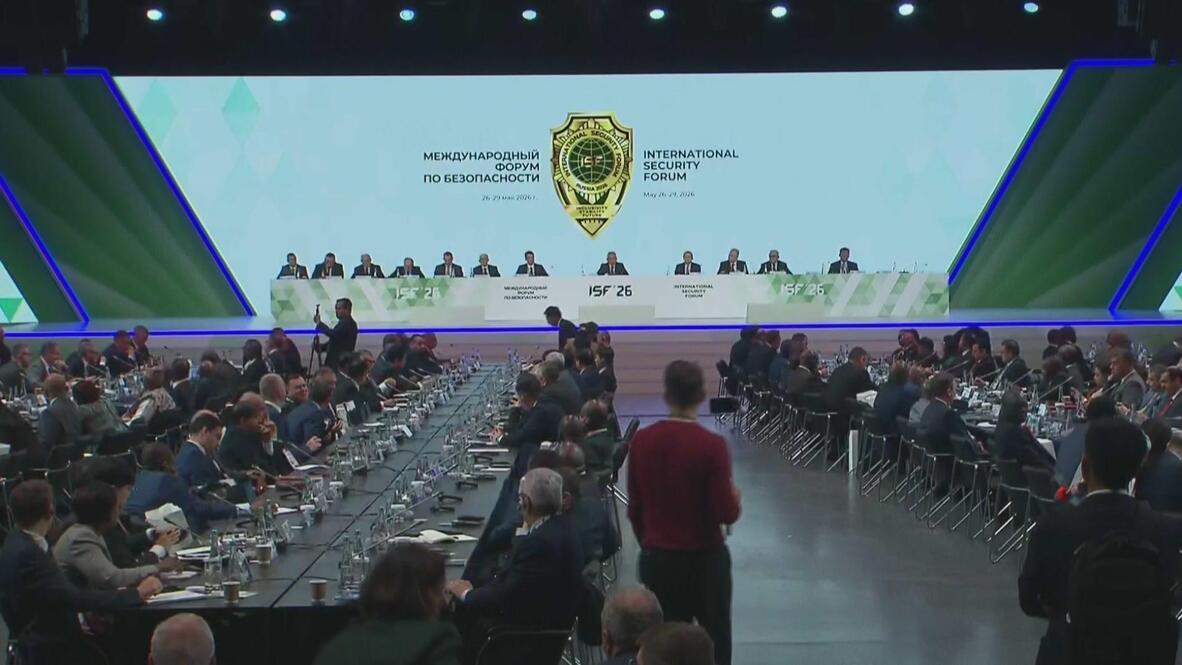
The International Security Forum takes place in the Moscow region on May 26-29, with more than 180 delegations from foreign states and international organisations. The programme includes bilateral and multilateral meetings, as well as visits to exhibition displays.
Iran war 'created unprecedented threats'… but it's all part of a bigger trend! - Kazakhstan's Security Council Secretary
Kazakh Security Council Secretary Gizat Nurdauletov said the Iran war had meant 'unprecedented threats' for the global economy - but had also only 'exacerbated a trend that has been developing for some time' speaking on the sidelines of the International Security Forum in Moscow Region on Thursday.
"The conflict in the Middle East and disruptions to shipping through the Strait of Hormuz and the Red Sea have created unprecedented threats to the economic interests of many nations. Despite the sheer scale of the crisis, it has merely exacerbated a trend that has been developing for some time: the transformation of pragmatic economic relations into hostages of geopolitical rivalry," he noted.
According to Nurdauletov, the most noticeable consequence was an artificially created instability in the field of food safety.
"Millions of people are already facing food shortages and rising food prices, not due to natural factors or crop failures, but because of logistical disruptions. The resilience of transport, energy and logistics infrastructure is taking on a strategic dimension amid growing instability. Guarantees of uninterrupted operation and free access must become a fundamental element of the new security architecture in the context of war and a multipolar world," the secretary added.
In turn, DPRK's State Intelligence Service Director Ri Chang-dae emphasised that the international situation is approaching a critical phase of tension due to what he called double standards and interference to preserve a Western-led unipolar system.
"In order to put an end to the global security crisis and instability in the world, we must build up our own security capabilities and work closely together in solidarity towards the construction of a multipolar world. It is essential to respect civilisations, cultures, traditions, development patterns and political systems," Ri Chang-dae said.
The International Security Forum takes place in the Moscow region on May 26-29, with more than 180 delegations from foreign states and international organisations. The programme includes bilateral and multilateral meetings, as well as visits to exhibition displays.
Kazakh Security Council Secretary Gizat Nurdauletov said the Iran war had meant 'unprecedented threats' for the global economy - but had also only 'exacerbated a trend that has been developing for some time' speaking on the sidelines of the International Security Forum in Moscow Region on Thursday.
"The conflict in the Middle East and disruptions to shipping through the Strait of Hormuz and the Red Sea have created unprecedented threats to the economic interests of many nations. Despite the sheer scale of the crisis, it has merely exacerbated a trend that has been developing for some time: the transformation of pragmatic economic relations into hostages of geopolitical rivalry," he noted.
According to Nurdauletov, the most noticeable consequence was an artificially created instability in the field of food safety.
"Millions of people are already facing food shortages and rising food prices, not due to natural factors or crop failures, but because of logistical disruptions. The resilience of transport, energy and logistics infrastructure is taking on a strategic dimension amid growing instability. Guarantees of uninterrupted operation and free access must become a fundamental element of the new security architecture in the context of war and a multipolar world," the secretary added.
In turn, DPRK's State Intelligence Service Director Ri Chang-dae emphasised that the international situation is approaching a critical phase of tension due to what he called double standards and interference to preserve a Western-led unipolar system.
"In order to put an end to the global security crisis and instability in the world, we must build up our own security capabilities and work closely together in solidarity towards the construction of a multipolar world. It is essential to respect civilisations, cultures, traditions, development patterns and political systems," Ri Chang-dae said.
The International Security Forum takes place in the Moscow region on May 26-29, with more than 180 delegations from foreign states and international organisations. The programme includes bilateral and multilateral meetings, as well as visits to exhibition displays.