 06:55
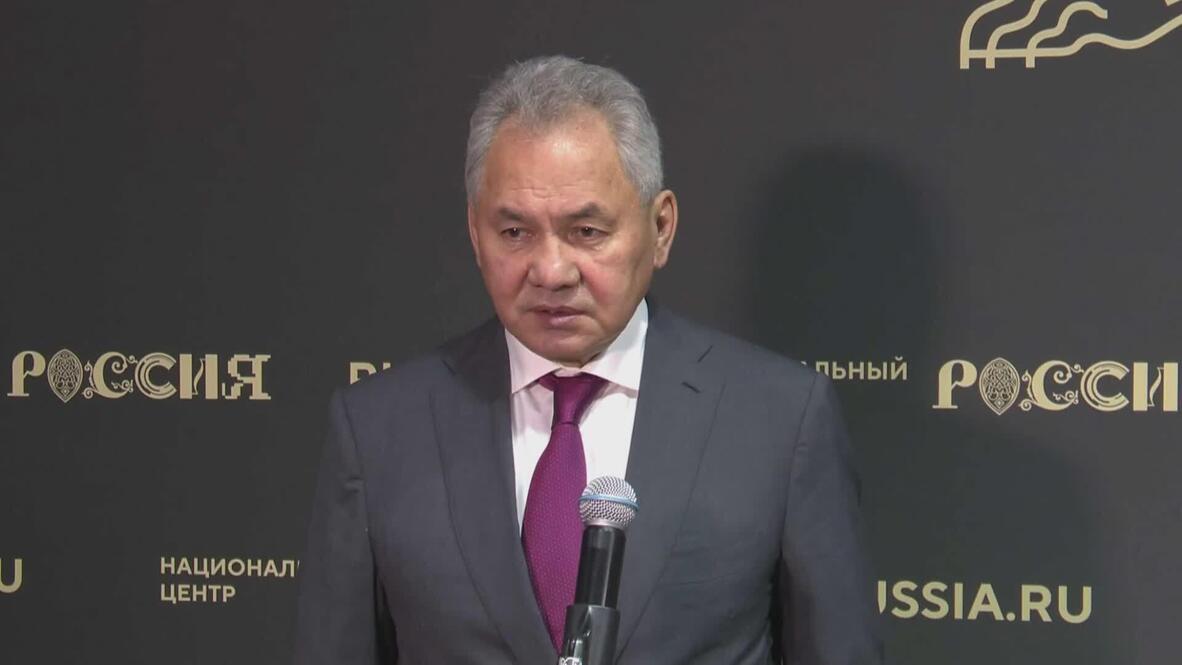
06:55Russian Security Council Secretary Sergei Shoigu said that the level of integration of the CIS, BRICS, CSTO and SCO groups continued to grow, speaking following the 13th meeting of the CIS Security Council secretaries in Moscow on Wednesday.
"Mutual integration of associations like the CIS, BRICS, CSTO, SCO continues. All this tends to develop and resolve different issues in the field of security. The meetings that take place at the highest level, both bilaterally and multilaterally, always take into consideration security issues," he stressed.
Shoigu also said the Europe was 'arming quite actively', with NATO expansionism continuing.
"Europe is arming quite actively. Various events are unfolding on the Belarusian border. So it closes, then it opens. The same goes for various statements from European politicians regarding Kaliningrad, the Baltic Sea," he said. "There are many different things here that lead us to monitor this very closely. The emergence of two new NATO members on our border is also quite a serious challenge for us."
Meanwhile, he noted that the situation surrounding Afghanistan had improved significantly.
"I will start with the simple one… the obvious reduction of the drug flow from this country to the CIS space. But the work still needs to continue. Here, the decision made by the CSTO, on the strengthening of the Tajik-Afghan border is quite important, particularly in terms of stopping drug trafficking," he added.
Shoigu also commented on the Zangezur Corridor and the North-South International Transport Corridor which, in his opinion, are two strategically important routes that complement each other.
"Both roads not only have the right to exist, they are needed for Azerbaijan to connect with its regions, for trade transport corridors between the two countries to appear. The 'North-South' links deep southern ports with the Northern Sea Route, the Arctic Ocean," he concluded.
The 13th meeting of the CIS Security Council secretaries is held in Moscow on November 4-6.
'Mutual integration of CIS, BRICS, CSTO, SCO continues' - Russian Security Council Secretary Shoigu
Russian Security Council Secretary Sergei Shoigu said that the level of integration of the CIS, BRICS, CSTO and SCO groups continued to grow, speaking following the 13th meeting of the CIS Security Council secretaries in Moscow on Wednesday.
"Mutual integration of associations like the CIS, BRICS, CSTO, SCO continues. All this tends to develop and resolve different issues in the field of security. The meetings that take place at the highest level, both bilaterally and multilaterally, always take into consideration security issues," he stressed.
Shoigu also said the Europe was 'arming quite actively', with NATO expansionism continuing.
"Europe is arming quite actively. Various events are unfolding on the Belarusian border. So it closes, then it opens. The same goes for various statements from European politicians regarding Kaliningrad, the Baltic Sea," he said. "There are many different things here that lead us to monitor this very closely. The emergence of two new NATO members on our border is also quite a serious challenge for us."
Meanwhile, he noted that the situation surrounding Afghanistan had improved significantly.
"I will start with the simple one… the obvious reduction of the drug flow from this country to the CIS space. But the work still needs to continue. Here, the decision made by the CSTO, on the strengthening of the Tajik-Afghan border is quite important, particularly in terms of stopping drug trafficking," he added.
Shoigu also commented on the Zangezur Corridor and the North-South International Transport Corridor which, in his opinion, are two strategically important routes that complement each other.
"Both roads not only have the right to exist, they are needed for Azerbaijan to connect with its regions, for trade transport corridors between the two countries to appear. The 'North-South' links deep southern ports with the Northern Sea Route, the Arctic Ocean," he concluded.
The 13th meeting of the CIS Security Council secretaries is held in Moscow on November 4-6.
Russian Security Council Secretary Sergei Shoigu said that the level of integration of the CIS, BRICS, CSTO and SCO groups continued to grow, speaking following the 13th meeting of the CIS Security Council secretaries in Moscow on Wednesday.
"Mutual integration of associations like the CIS, BRICS, CSTO, SCO continues. All this tends to develop and resolve different issues in the field of security. The meetings that take place at the highest level, both bilaterally and multilaterally, always take into consideration security issues," he stressed.
Shoigu also said the Europe was 'arming quite actively', with NATO expansionism continuing.
"Europe is arming quite actively. Various events are unfolding on the Belarusian border. So it closes, then it opens. The same goes for various statements from European politicians regarding Kaliningrad, the Baltic Sea," he said. "There are many different things here that lead us to monitor this very closely. The emergence of two new NATO members on our border is also quite a serious challenge for us."
Meanwhile, he noted that the situation surrounding Afghanistan had improved significantly.
"I will start with the simple one… the obvious reduction of the drug flow from this country to the CIS space. But the work still needs to continue. Here, the decision made by the CSTO, on the strengthening of the Tajik-Afghan border is quite important, particularly in terms of stopping drug trafficking," he added.
Shoigu also commented on the Zangezur Corridor and the North-South International Transport Corridor which, in his opinion, are two strategically important routes that complement each other.
"Both roads not only have the right to exist, they are needed for Azerbaijan to connect with its regions, for trade transport corridors between the two countries to appear. The 'North-South' links deep southern ports with the Northern Sea Route, the Arctic Ocean," he concluded.
The 13th meeting of the CIS Security Council secretaries is held in Moscow on November 4-6.